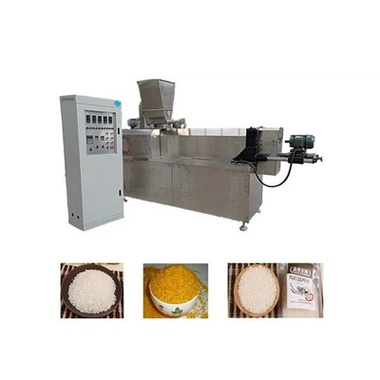

Over 12 Hours Of Water Stability: Forward's Twin-Screw Extrusion Technology Ensures Consistent Quality in Fish Feed
Jul 17, 2026
As the global aquaculture industry accelerates its transformation toward intensification and sustainability, the stability of feed quality has become a critical factor determining farming efficiency and water environment health. Jinan Forward Machinery Co., Ltd., backed by decades of technical accumulation in the extrusion field and anchored by twin-screw extrusion technology, provides high-quality floating fish feed production solutions for aquaculture feed manufacturers worldwide. The extruded fish feed produced by Forward's equipment maintains water stability for over 12 hours without disintegration, earning widespread market recognition at home and abroad for its consistently excellent quality.

I. Technological Breakthrough: How Twin-Screw Extrusion Achieves 12-Hour Water Stability
Traditional pellet feeds and single-screw extruded feeds have long suffered from poor water stability-feed disintegrates rapidly upon entering water, causing not only significant waste but also eutrophication of aquaculture water bodies, increasing farming costs and environmental burdens. The core breakthrough of Forward's twin-screw extrusion technology lies in achieving fundamental optimization of the feed pellet's internal structure through precise process control.
The material undergoes high temperature (120-160°C), high pressure (20-40 bar), and high shear forces within the twin-screw extruder barrel, resulting in complete starch gelatinization and controlled protein denaturation. Gelatinized starch acts as an excellent natural binder, and combined with the twin-screws' co-rotating intermeshing action and powerful kneading, the pellet structure becomes dense and uniform. The network structure formed during the extrusion process imparts exceptional water resistance to the pellets-whether floating or sinking feed, they maintain integrity without disintegration after 12 hours of immersion in water. This technical indicator far exceeds conventional industry standards, providing reliable assurance for aquaculture operations.
The twin-screw extruder adopts a co-rotating intermeshing twin-screw configuration, enabling precise processing of complex formulations including high-fat and high-fiber ingredients through multi-stage shearing, mixing, and thermo-mechanical cooking. Compared with single-screw extruders, the twin-screw technology offers broader raw material adaptability, higher production efficiency, and superior product stability. The self-wiping feature of the twin-screws effectively prevents material buildup and backflow, ensuring long-term continuous and stable operation of the equipment and maintaining consistent quality across every batch.
II. Quality Assurance: End-to-End Precision Control from Raw Material to Finished Product
Forward's fish feed production line encompasses a complete process flow including grinding, batching and mixing, conditioning, extrusion, drying, coating, cooling, and packaging, with strict quality control standards established at every stage.
In the grinding stage, a micro-grinder reduces raw materials to a particle size where over 95% passes through a 40-60 mesh screen, ensuring thorough and uniform subsequent conditioning and extrusion. In the conditioning stage, a double-layer or triple-layer conditioner brings the powder material into full contact with saturated steam, raising material temperature to 85-95°C, increasing moisture content by 3-5%, initiating starch gelatinization and protein denaturation. As the core process, the twin-screw extruder achieves a gelatinization degree exceeding 90%, far higher than the approximate 40% gelatinization level of ordinary hard pellet feeds. The drying stage employs a multi-layer belt dryer, achieving uniform dehydration through counter-flow or cross-flow drying principles, with final product moisture content controlled within 10%. The coating stage offers either vacuum coating or atmospheric coating options based on customer requirements-vacuum coating achieves an absorption rate of over 95%, with deep oil penetration and a clean, oil-free surface appearance.
This end-to-end precision control ensures that every batch of fish feed maintains high consistency in color, texture, expansion ratio, and pellet size, providing farmers with a stable and reliable product experience with every feeding.

III. Value Creation: Tangible Benefits for Farmers and Feed Manufacturers
The fish feed produced by Forward's twin-screw extrusion technology delivers significant value to both the farming side and the feed production side.
For farmers, water stability exceeding 12 hours means that feed maintains its complete form for an extended period after entering the water, giving fish ample time to feed and substantially reducing feed waste. The stable pellet structure also reduces the organic matter and nitrogen/phosphorus load in the water, decreasing the frequency of water exchanges and aeration requirements. The excellent digestibility resulting from high gelatinization effectively promotes healthy fish growth and reduces the feed conversion ratio (FCR). The high-temperature and high-pressure extrusion process also effectively eliminates pathogenic bacteria from raw materials and inactivates anti-nutritional factors, enhancing feed safety.
For feed manufacturers, the twin-screw extruder's broad raw material adaptability-capable of processing high-fat (with oil content up to 20% or more), high-moisture, and sticky ingredients-enables flexible formulation adjustments and cost optimization. The multi-purpose capability supports the production of floating, sinking, and slow-sinking feeds to meet the requirements of different aquatic species. The modular equipment design facilitates future capacity expansion and upgrades, protecting customers' long-term investment.
IV. Global Validation: The Choice of Customers in over 50 Countries
Forward's fish feed production lines have successfully served customers in more than 50 countries and regions worldwide, establishing a mature market network spanning five continents. In Europe (Russia, Ukraine, Bulgaria, Italy, Greece, Spain, etc.), Asia (Indonesia, Vietnam, Thailand, Malaysia, India, Uzbekistan, Kazakhstan, etc.), Africa (Nigeria, Egypt, South Africa, Mali, Kenya, etc.), the Americas (United States, Canada, Brazil, Chile, Colombia, Costa Rica, etc.), and Oceania (Australia), Forward's equipment operates around the clock to consistently produce high-quality fish feed for the global aquaculture industry.
Real-world application data fully validates the equipment's value: A Malian customer's 20,000-ton-per-year tilapia feed production line, using Forward's equipment, achieved an FCR below 1.2, increasing farming profitability by 15%; a Costa Rican customer, relying on this machine to produce slow-sinking shrimp feed, achieved water stability exceeding 12 hours, successfully replacing imported products and increasing farming survival rates by 10%; a Russian customer's fish feed production line achieved stable production of high-fat feed with oil content exceeding 20%, with pellet uniformity reaching 98%. The company offers a full range of capacity configurations from 500 kg/h to 10 tons/h, as well as full-cycle engineering services from greenfield plant construction and production line upgrades to key main equipment supply, ensuring every customer receives a tailored solution.
V. Professional Credentials: Decades of Expert Team Building Technical Confidence
Forward Machinery brings together a team of experts who have worked in the extrusion industry for decades. Since its establishment, the company has adhered to the principle of "Science and Innovation First, Management and Credit as Root" and the business philosophy of "Quality First, Practical Work, Integrity to Others." The company possesses significant advantages in talent, resources, network, scale, and experience within the extrusion machinery field, and is currently a leading specialized manufacturer, producer, and R&D developer of extrusion equipment and auxiliary systems in China. Excellent product quality and comprehensive after-sales service have earned the company a strong reputation in the industry and recognition from domestic and international customers.
The company has established a full-process quality control system covering design, procurement, production, and inspection, with clear identification of key components to ensure product traceability. Finished products undergo rigorous in-factory testing and commissioning before being allowed to leave the factory. The company provides a one-year warranty and comprehensive after-sales service: for domestic customers, technicians arrive at the site within three days for provincial clients and within four days for out-of-province clients; the company also supplies high-quality, competitively priced spare parts and supporting services year-round.

Conclusion
The global aquaculture industry continues to expand, with consumption upgrading driving rapid growth in demand for high-quality aquatic products. Efficient, environmentally friendly, and nutritionally balanced extruded floating feed has become a core requirement for industrial upgrading. Forward's twin-screw extrusion technology, with its core advantages of 12-hour water stability, over 90% starch gelatinization degree, and broad raw material adaptability, provides trustworthy feed production equipment for global aquaculture. The company will continue to be driven by technological innovation and customer success, helping the global aquaculture industry achieve efficient, green, and sustainable development.