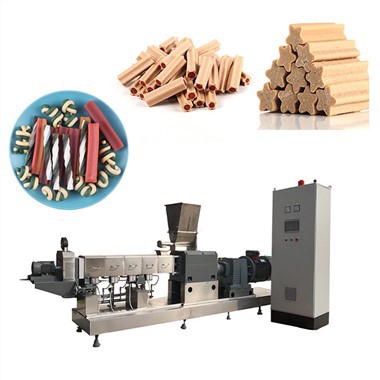



Floating Fish Feed Extruder Machine Plant
1. Certification: CE ISO SGS.
2. Motor: Siemens, ABB or Chinese Brand.
3. Voltage: 380v/50hz three-phase or customized.
4. Shapes: Clients' Demands.
5. Warranty: 1 Year.
6. Feed types: Floating & Sinking.
Description
Products Description
Twin screw extruders are commonly used in the production of fish feed due to their numerous advantages. These machines use twin intermeshing screws to create a continuous flow of materials that are uniformly mixed, cooked, and shaped. Here are some of the reasons why twin screw extruders are preferred in the production of fish feed:
1. Consistent product quality - Twin screw extruders ensure consistent product quality due to their ability to incorporate different ingredients in precise ratios. This means that the final product has a uniform size, shape, and texture.
2. Increased digestibility - Twin screw extruders improve the digestibility of fish feed by breaking down complex sugars and starches in the feed ingredients. This enhances the nutrient uptake of fish and improves their growth and overall health.
3. High productivity - Twin screw extruders have high productivity rates due to their continuous processing capabilities. This means that large volumes of fish feed can be produced in a short time, making them ideal for commercial fish farming.
Product Video
Final Product Show

Floating fish feed features and advantages:
Floating fish feed has become increasingly popular in recent years due to its numerous benefits. Here are some of the characteristics and advantages that make it a top choice for fish farmers:
1. High Nutritional Value: Floating fish feed is made from quality ingredients that are high in protein, vitamins, and minerals essential for fish growth and development. These nutrients are essential for maintaining the health and well-being of your fish.
2. Digestibility: Floating fish feed is easy for fish to digest, meaning they can absorb more nutrients from it, leading to faster growth. The small size and texture of the pellets help to make them more digestible.
3. Long Shelf Life: Compared to other types of fish feed, floating fish feed has a longer shelf life, which means that farmers can store it for longer without worrying about it becoming moldy. This is particularly important for farmers who operate in remote areas where access to feed is limited.
4. Reduced Waste: Unlike other types of feed that sink to the bottom of the pond, floating fish feed does not leave any waste residue that can contaminate the water. This not only keeps your pond clean but also reduces the risk of disease outbreaks.
5. Flexibility: Floating fish feed can be formulated according to the specific needs of your fish, which means you can choose a feed that suits the age, species, and size of your fish.
6. Increased Profitability: With floating fish feed, farmers can achieve faster growth rates, higher survival rates, and improved fish health. This translates into increased profits for the farmer, which makes it the perfect choice for anyone looking to improve their fish farming operations.
Production Line flow chart

The first step in the production line is the pre-treatment of raw materials. This may involve cleaning, sorting and grinding of the ingredients. This process helps in removing any impurities or foreign matter that may be present in the raw materials.
The next step involves mixing and blending of the raw materials. This is a crucial step that requires precision and accuracy to ensure the appropriate composition of the feed. The ingredients are weighed and mixed in the appropriate proportions to ensure the correct nutrient content.
Next, the blended material is processed through a pelletizing machine to form pellets. This process ensures that the feed is the right size, shape and density to meet the fish's needs.
Once the pellets are formed, they are dried to remove excess moisture and then cooled to prevent mold formation. After cooling, the pellets are screened and inspected again to ensure that the quality of the feed is maintained.
Finally, the finished product is packaged and stored in a safe and secure environment before being distributed to the market. This ensures that the feed retains its quality and is not contaminated by external factors.
Technical Parameters
|
Model |
Installed Power |
Power Consumption |
Output |
Size |
|
DSE - 65 |
74 kw |
52 kw |
100-150 kg/hr |
17x1.3x2.2(m) |
|
DSE - 70/75 |
105 kw |
75 kw |
200-250 kg/hr 250-350 kg/hr |
20x1.5x2.2(m) |
|
DSE - 85 |
205kw |
150 kw |
350-500kg/hr |
30x1.5x2.6(m) |
|
DSE - 95 |
165kw |
90kw |
1000-1500kg/hr |
40x3.5x4.5(m) |
|
DSE - 132 |
280kw |
132kw |
3000-3500kg/hr |
45x4.5x6(m) |
Machine Details

twin screw extruder advantaFeatures
Twin-screw production of fish feed offers numerous advantages over other production methods. These advantages include increased production efficiency, improved product quality, and greater flexibility in the production process.
Firstly, twin-screw production allows for higher production efficiency. This is because twin-screw extruders are highly efficient machines, capable of producing large quantities of feed in a relatively short amount of time. This efficiency means that manufacturers can produce more feed with fewer resources, resulting in cost savings for both the manufacturer and the consumer.
Secondly, twin-screw production produces higher-quality fish feed. This is because the extruder can process a variety of ingredients simultaneously, ensuring that the nutrients in each ingredient are fully utilized. Additionally, the extrusion process creates a highly digestible feed, which means that the fish can absorb more of the nutrients, resulting in healthier and more productive fish.
Finally, twin-screw production offers greater flexibility in the production process. This is because manufacturers can easily adjust the extruder to produce different types of feed with varying nutritional content. This flexibility means that manufacturers can customize their products to meet the specific needs of their customers, ensuring that the fish are getting the best possible nutrition.
In conclusion, the advantages of twin-screw production of fish feed are numerous. Increased production efficiency, improved product quality, and greater flexibility in the production process all contribute to a better product and a more sustainable industry.
Certificates

Our company is proud to hold a variety of certificates that demonstrate our commitment to excellence, sustainability, and safety in all aspects of our operations.
One of our most important and widely recognized certificates is our CE and SGS certification, which acknowledges our focus on quality management and continuous improvement. This certification ensures that every product and service we provide meets the highest possible standards, and gives our customers confidence that we are always working to exceed their expectations.
In addition to these certifications, we also hold a range of other industry-specific certificates and accreditations that demonstrate our expertise, competence, and adherence to best practices. These include certifications in health and safety, information security, and more.
Overall, our certificates are a testament to our values and our commitment to providing the highest quality products and services in a responsible and sustainable way. We are proud to hold these certifications, and we will continue to work hard to maintain and improve them in the years to come.
about our service
Pre-sales services typically include technical consultations, equipment recommendations, and quotations. The supplier should have a team of knowledgeable and experienced professionals who can assist customers in selecting the right equipment for their needs and provide detailed specifications and pricing information. They should be able to answer questions promptly, offer fairs quotes, and be willing to provide on-site inspections.
After-sales services, on the other hand, are just as important as pre-sales services since they concern with ensuring that the machine performs well and address any issues that may arise after installation. A good extruder supplier should offer training and technical support to help customers operate their new equipment. Additionally, they should also have a team of in-house technicians who can provide repair and maintenance services in the case of equipment failure or breakdowns.
Other services that a good extruder supplier might offer include supply of spare parts and accessories, machine upgrades, and remote monitoring and troubleshooting. By offering these services, the supplier will ensure that their customers receive the best possible value from the investment and can rely on the equipment's longevity.
Packing & Shipping
When it comes to shipping, safety and reliability are crucial. Our shipping method is designed to ensure that your goods arrive at their destination in perfect condition. We begin by carefully packing and securing your items before they leave our warehouse. We use high-quality materials and sturdy boxes that are specifically designed for shipping.
Our shipping carriers are highly reputable and have a track record of delivering packages without any issues. We choose the most suitable carrier for your shipment based on the size, weight, and destination of your package. We offer a variety of shipping options to ensure that your package arrives on time, whether you need it delivered within a certain timeframe or prefer a slower, more economical option.

Hot Tags: floating fish feed extruder machine plant, China floating fish feed extruder machine plant manufacturers, factories, Shrimp Feed Machine, Fish Food Extruder Machine, Fish Feed Production Line, Fish Food Processing Line, Floating Fish Feed Pellet Making Machine, Fish Feed Production Machine