


From The Jinan Workshop To South American Farms: Forward Machinery’s 3 T/h Floating Fish Feed Line Ships To Ecuador
Nov 23, 2026
Process Chain Prioritized Over Individual Machine Packaging
Production scheduling begins before extrusion. Aquafeed raw materials-corn, soybean meal, wheat-based materials, and fishmeal-must first undergo controlled grinding and mixing before entering the conditioning and extrusion stages. The Forward DSE series twin-screw extruder adopts a side-by-side co-rotating structure and a segmented combined screw design. Together with a visual temperature control system, it can stably process high-fat and high-protein raw materials and control feed density by adjusting extrusion parameters, enabling flexible switching between floating and sinking feed on the same line. The wet extrudate then enters the drying stage for moisture removal, followed by cooling, controlled oil spraying according to the formula, and finally screening and handling. Therefore, the equipment shipped this time was crated in groups according to process flow rather than simply stacked by machine count, so that the Ecuadorian on-site team can directly match the installation sequence during unloading and positioning.
One Line, Multiple Specifications Commissioned Separately
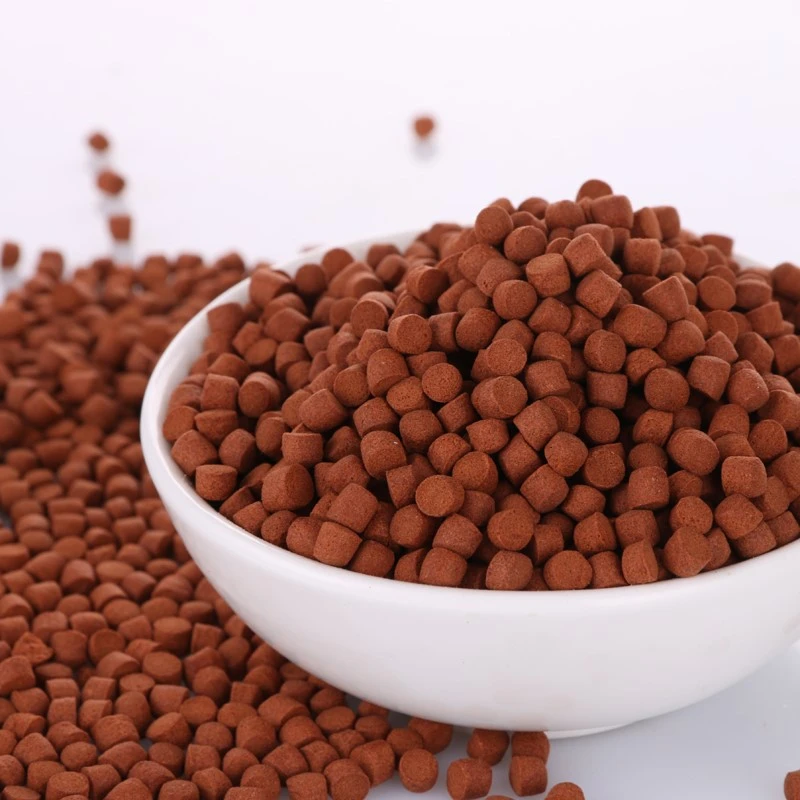
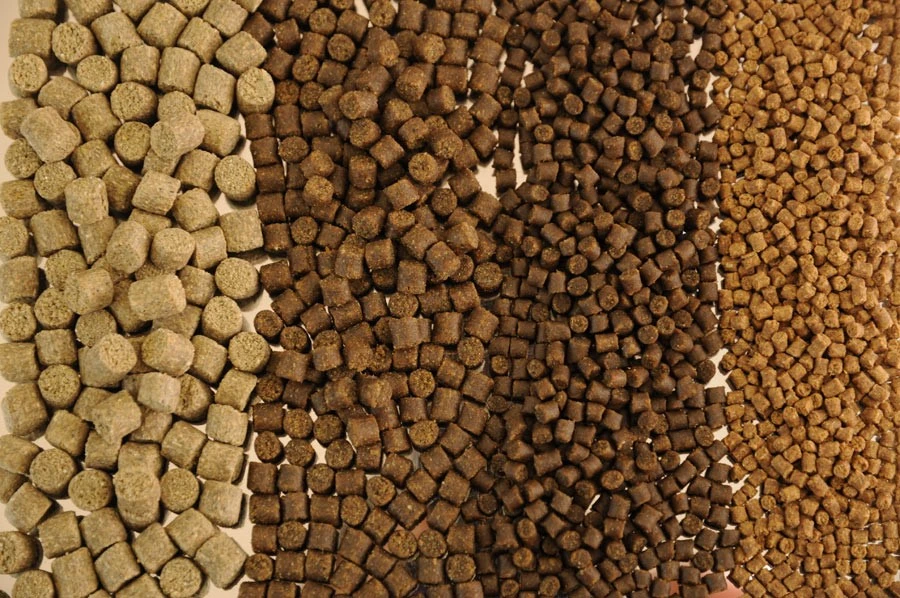
The customer plans to cover multiple product specifications, from approximately 1.5 mm feed for small fish to approximately 6 mm feed for larger fish. Forward's fish feed production line covers pellet diameters from 1 mm to 10 mm, meeting the full range of needs from fry opening feed to grow-out feed. However, products of different diameters differ in their actual performance requirements for grinding fineness, extrusion temperature, drying curve, and capacity. Small pellets require higher grinding fineness and may affect hourly output; large pellets require different extrusion and drying conditions. During on-site commissioning in Ecuador, the main commercial specifications will be tested separately under no-load and load conditions. The 3 t/h figure should be understood as the design baseline capacity of the line, not a fixed output for every formula and pellet diameter.
Packaging Marks Serve the Installation Logic
A complete aquafeed line includes conveyors, structural parts, electrical components, and piping connections, which often appear unrelated once separated from the factory layout. Before shipment, the Forward project team completed equipment identification and packaging records in accordance with the customer-approved layout, enabling the on-site team to check items one by one using the installation sequence as an index during unloading and positioning. After the container arrives in Ecuador, mechanical installers will reconnect the grinding, batching, mixing, extrusion, drying, cooling, and downstream systems, followed by no-load trial operation. Only after the no-load inspection is passed will the customer's local raw materials enter the line for material commissioning. Forward provides overseas customers with basic formula reference, free installation and commissioning guidance, and operator technical training; this service framework will run through the entire commissioning cycle at the Ecuadorian site.
From São Paulo to Ecuador: A Continuous Step in the Latin American Layout
The shipment of this Ecuadorian project is not an isolated move by Forward Machinery in the Latin American market. Previously, Forward clearly positioned Latin America at exhibitions as an important target market during a period of rising demand for high-quality extruded aquafeed. From exhibition contact to project implementation, from pre-assembly in the Jinan workshop to reconnection at the Ecuadorian site, Forward is gradually applying its export experience accumulated in Southeast Asia, Africa, Central Asia, and other markets to the Latin American aquaculture belt. For the Ecuadorian producer, this 3 t/h floating fish feed line is no longer just a capacity figure on drawings; it is arriving at the site where commercial aquafeed will soon be produced in a traceable, installable, and commissionable physical form.


