




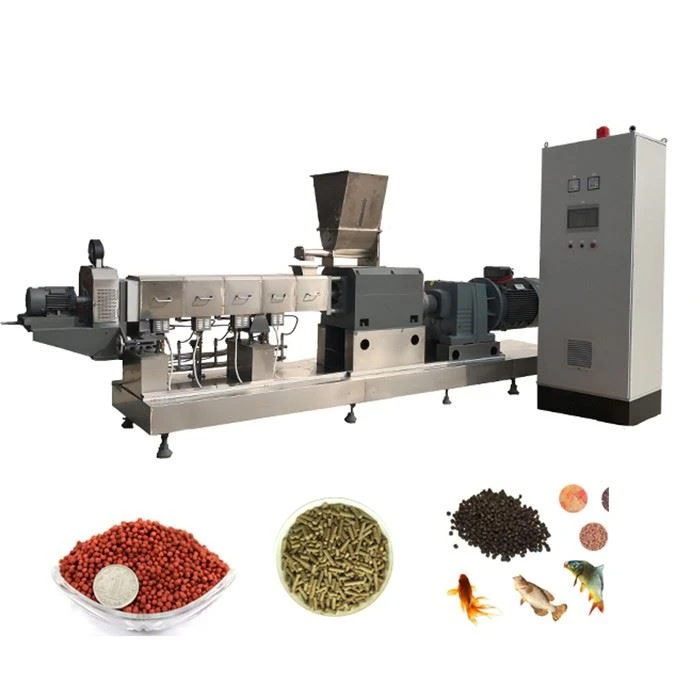


Sinking Fish Feed Extruder Machine
1. Certification: CE ISO SGS.
2. Motor: Siemens, ABB or Chinese Brand.
3. Key Selling Points: Long Service Life.
4. Usage: Feed machine.
5. Service: 24h Online.
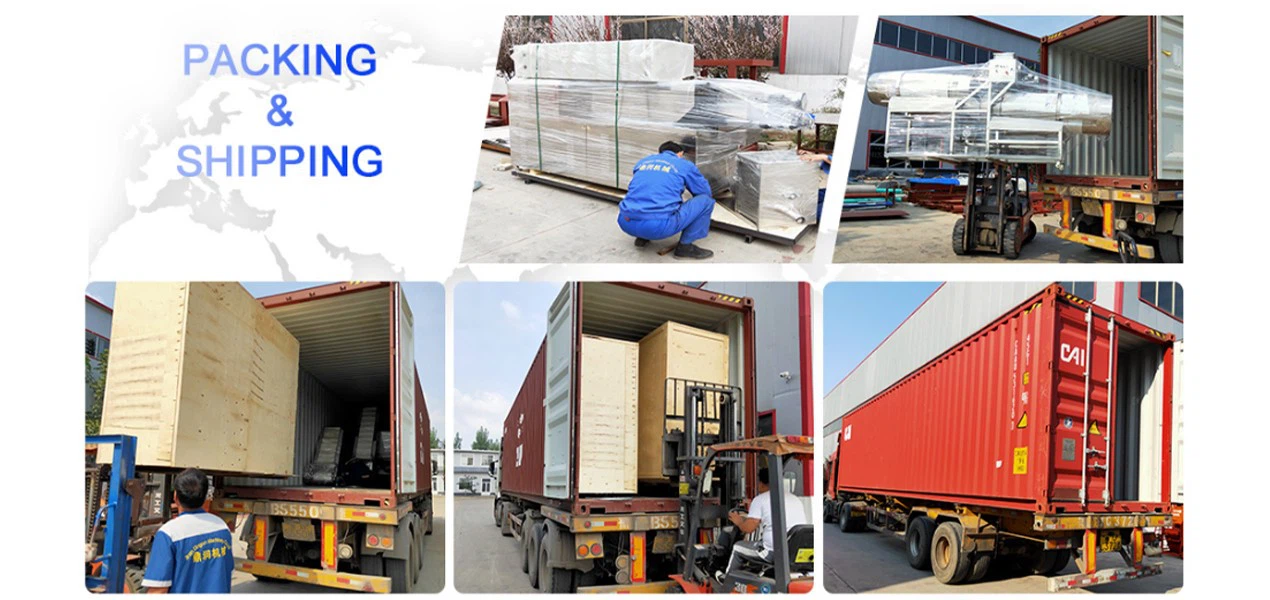
6. Packing: Wooden Case.
Description
Product Video
Product Sample

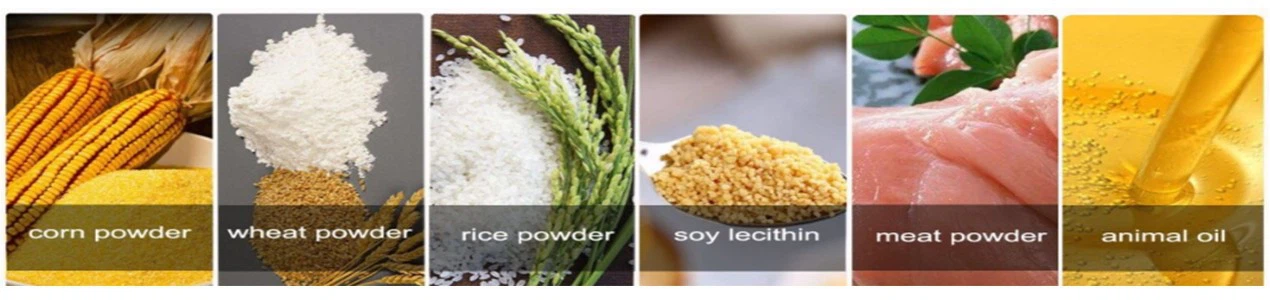
Raw Materials
Rice flour, corn flour, wheat flour, low temperature soya flakes meal, rice bran, wheat bran, fish powder, bone powder etc.
Extruder Model

We develop customized production line solutions based on the required productivity and specific requirements of each client. It's worth noting that high-performance production lines typically feature a more complex design and overall layout.
Furthermore, environmental protection and workplace safety are our top priorities at every stage of project implementation. To ensure environmental compliance, we pay close attention to managing emissions and wastewater generated during production, select equipment that meets official environmental standards, and implement effective on-site waste treatment and sanitation measures.
Regarding workplace safety, we provide personnel with professional protective equipment and deliver structured safety training programs to reduce and prevent potential risks in daily production activities.
Finally, we comprehensively address the diverse needs of our clients and offer optimized, reliable, environmentally sustainable, and safe production lines, as well as complete integrated solutions.
Flow Chart
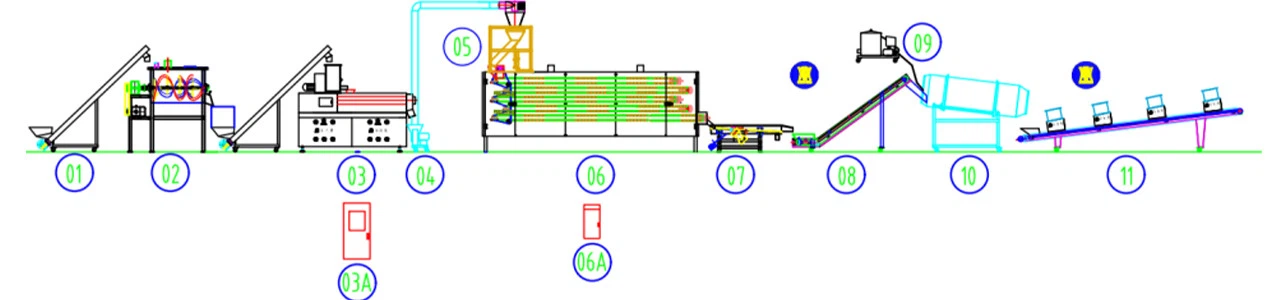
Fish feed is a vital agricultural product, providing aquaculture with essential protein, nutrients, and energy through sophisticated processing technologies. Fish feed production is a complex process involving multiple steps designed to ensure high quality. Below is a complete breakdown of a typical fish feed production process.
1. Powder Mixer: The first step in feed production involves homogeneously mixing various powdered raw materials. Powder mixers combine the various ingredients in a formula to produce a balanced mixture ready for further processing.
2. Screw Conveyor: The mixed powder is fed into a screw conveyor at the required ratio, which helps form a more homogeneous mixture before entering the extruder.
3. Extruder: The extruder is a key piece of equipment in fish feed production. Its primary function is to convert powder mixtures into feed pellets of the appropriate size and shape. Using high-pressure technology, the extruder forces the raw material through a die for cutting and shaping, ultimately producing pellets with stable and uniform characteristics.
4. Air Pump: Wet pellets exiting the extruder are fed into a drying system using an air pump to reduce moisture content.
5. Dryer: After being fed by the air pump, the pellets enter a professional dryer to remove excess moisture. Inside the drying chamber, the pellets are processed under high-temperature and low-humidity conditions, ensuring rapid and complete dehydration.
6. Oil Spray for Flavoring in a Rotating Drum: After drying, the pellets are sprayed with oil to enhance their nutritional value and flavor. The pellets rotate smoothly in a rotating drum, ensuring an even and uniform oil coating.
7. Cooling: After oil coating and flavoring, the pellets are cooled on a cooling conveyor belt. This process reduces the pellet temperature to a suitable level, facilitating packaging and long-term storage.
8. Packaging: The final stage involves packaging the finished feed into bags according to specified weight and size requirements, preparing it for distribution and sale.
Finally, feed production is a well-structured process that integrates multiple stages to maintain high product quality. Modern production methods and equipment technologies have facilitated significant innovation and development in the feed industry, allowing us to more effectively support agricultural progress.
Machine Details
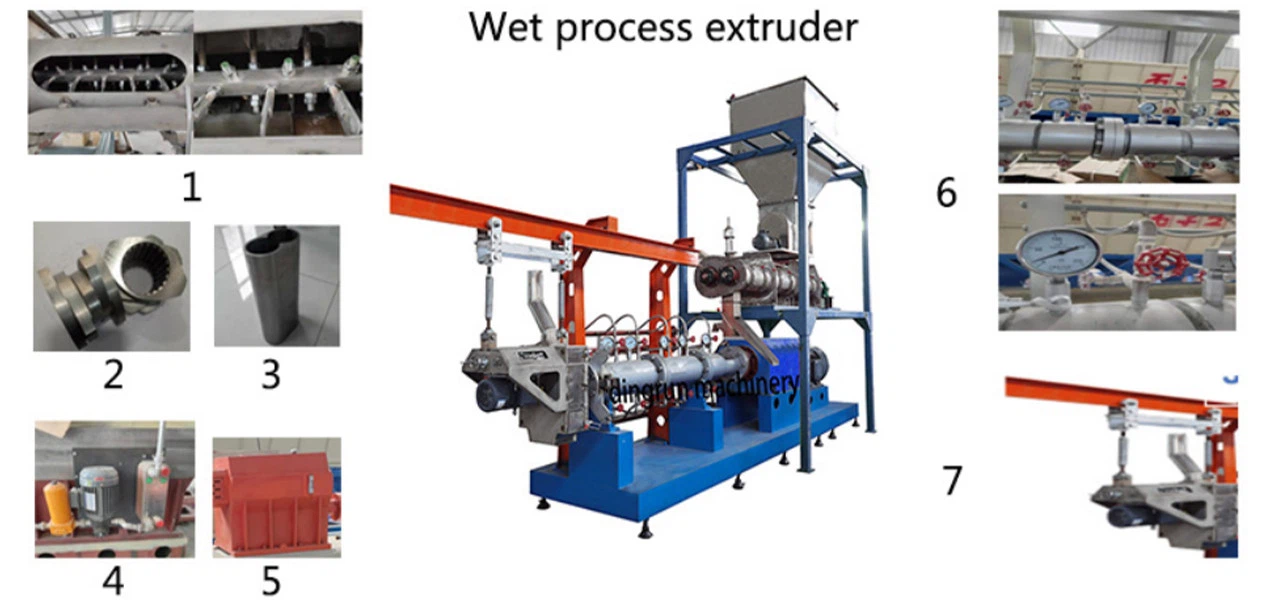
This extruder supports single-, dual-, or triple-axis preconditioning, effectively increasing productivity and significantly improving protein levels in aquaculture feeds.
The extrusion screw is constructed of Cr12MoV alloy steel, and its modular design provides exceptional versatility. Screw configurations can be freely modified to suit customer feed formulations, significantly extending its service life.
The main cylinder is constructed of 45# carbon steel and features a wear-resistant, one-piece liner. With a hardness of HRC58–62, the liner ensures long service life and reduces maintenance and replacement costs.
The complete system includes a filter unit and condenser, which effectively separate contaminants from the oil and protect bearings and gears through external water cooling.
The gearbox features a robust design, constructed of heat-treated QT400 ductile iron, ensuring superior stability and reliability.
The machine's main cylinder is made of #45 steel and features a highly hard, wear-resistant bushing. Hardness ratings of HRC58 to 62 ensure a long service life and low maintenance costs.
The cantilever rotary cutting system allows for easy on-site adjustments, ensuring fast, precise cutting and smooth, efficient production.
Project Cases
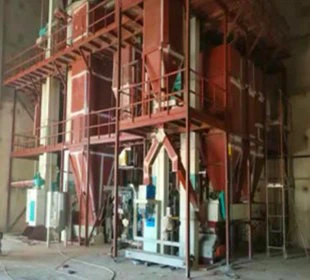
500-600kg/h Fish feed production line in Turkey
Country: Turkey
Date: May 10th, 2018
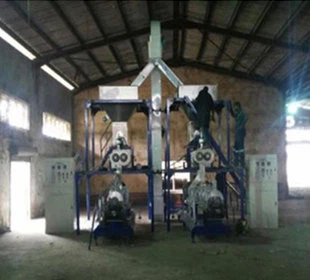
2-2.5ton Floating fish feed production line in Africa Mali
Country: Mali
Date: July 18th, 2019

1000-1500kg/h Dog food production line in Russia
Country: Russia
Date: Nov 29th, 2020

3-3.5ton Slow sinking fish feed line in Nigeria
Country: Nigeria
Date: Feb 06th, 2017

1500-2000kg/h Fish feed production line Malaysia
Country: Malaysia
Date: Oct 29th, 2019

600-800kg/h fish feed production line in Congo
Country: Congo
Date: Jan 28th, 2022
Packing & Shipping
Hot Tags: sinking fish feed extruder machine, China sinking fish feed extruder machine manufacturers, factories, Floating Fish Feed Production Line, Fish Food Processing Line, Shrimp Feed Machine, Fish Feed Production Machine, Fish Food Extruder Machine, Floating Fish Feed Pellet Making Machine


